Last February, a Valentine’s Day rose grower I know in Ecuador told me something that stuck with me. His crop had hit its peak three weeks early. The plants were fine. The calendar was not. Stems that should have been timed for the biggest sales week of the year were already opening in the cooler. Stories like this are becoming routine, and they show how climate change is rewriting the rules of a business built on precise timing, delicate plants and long supply chains.
Cut flowers are a strange crop. They are perishable, highly seasonal, and shipped across continents in days. The United States imports roughly 80 percent of its fresh cut flowers, mostly from Colombia and Ecuador, with smaller volumes from the Netherlands, Mexico and Canada. Meanwhile, domestic growers in California, Washington, Oregon and Michigan, plus a fast-growing wave of small “slow flower” farms, supply the rest. Every link in that chain is exposed to weather. Here is how heat, drought and shifting seasons are changing the picture in 2026.
Heat: when flowers run faster than the plan
Most cut flower crops are scheduled by temperature. Growers count on a predictable number of “degree days” between planting and harvest. When nights stay warm, plants develop faster, and the whole schedule compresses.
The effects show up in several ways:
- Smaller, weaker stems. Roses grown under heat stress often have shorter stems, smaller heads and fewer petals. Florists pay by grade, so a lower grade means lower revenue.
- Shorter vase life. Warm growing conditions and hot post-harvest handling both burn through a flower’s stored sugars. A bloom that once lasted ten days may fade in seven.
- Color and form problems. Sunflowers, snapdragons and lisianthus can bolt, blast or lose color intensity when temperatures spike. Peonies need winter chill to set buds, and mild winters leave some varieties underperforming.
- Greenhouse overload. Even in structures with fans and shade cloth, summer heat waves can push interior temperatures past what many crops tolerate.
The cold chain matters just as much. A truck stalled in a heat wave or a warehouse with a failing cooler can wipe out a shipment, and extreme heat events make those failures more likely.
Drought and water: the quiet constraint
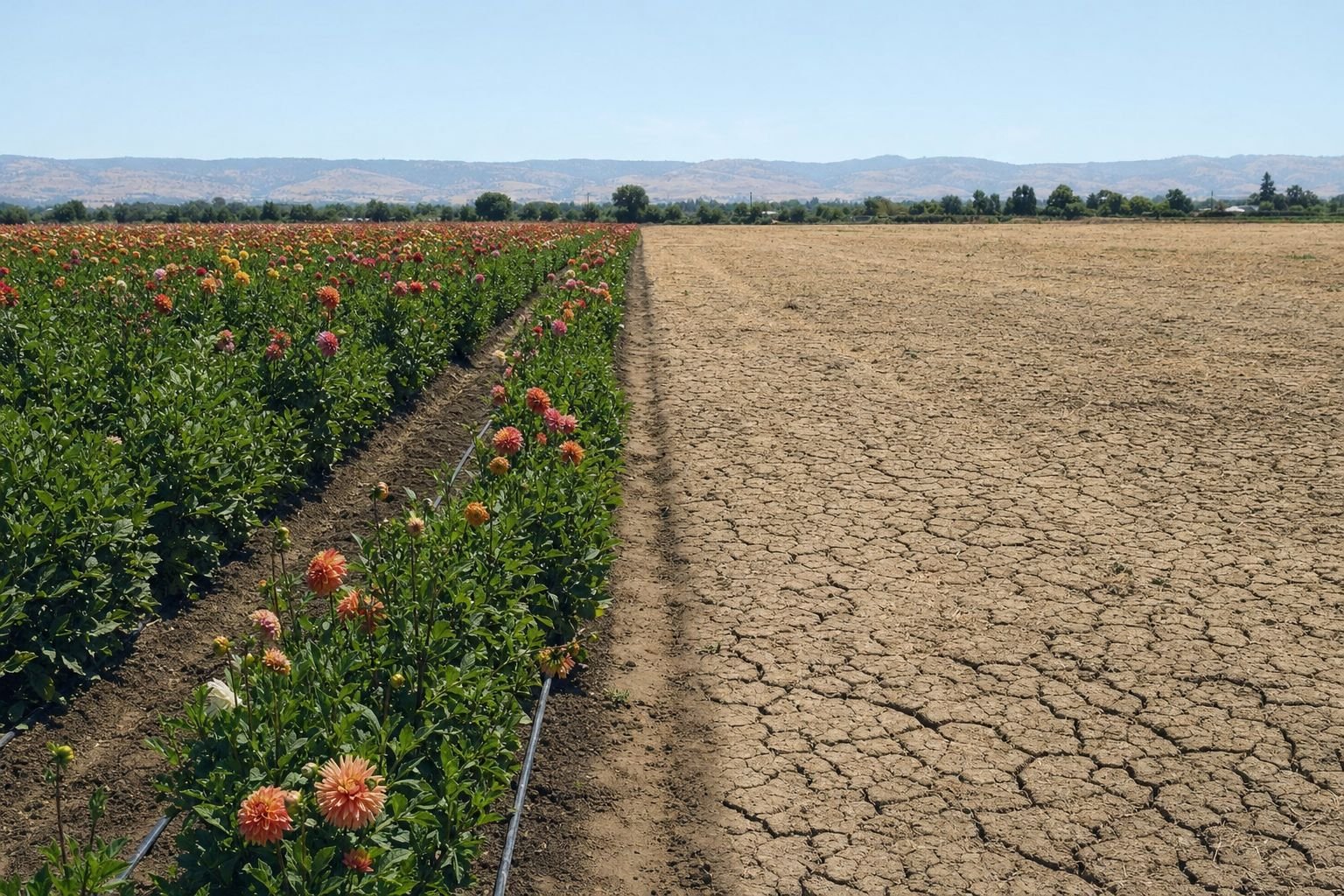
Flowers are mostly water, and growers need a lot of it. In California’s Central Valley and along the Central Coast, repeated drought years and tighter groundwater rules have pushed farms to rethink how much they irrigate. In the Andean highlands near Bogotá and Quito, shifting rainfall patterns and shrinking glacier-fed streams are creating similar pressure.
Growers are responding with practical tools rather than miracle fixes:
- Drip irrigation and soil moisture sensors that water by need, not by habit.
- Recirculating hydroponic systems in greenhouses, which can cut water use substantially compared with open-field watering.
- Rainwater capture and wastewater treatment, now common on larger Colombian farms.
- Mulching and cover crops on smaller outdoor farms to hold moisture and moderate soil temperature.
One common mistake I see is treating drought as a summer-only problem. Dry winters and low snowpack reduce water availability months later, right when spring crops need it most.
Shifting seasons and the Valentine’s Day problem
The flower business revolves around a handful of holidays: Valentine’s Day, Mother’s Day, Easter, Thanksgiving and Christmas. Demand is fixed to a date, but plants do not read calendars. Warmer winters and erratic springs can cause crops to flower early, late or unevenly.
Local growers feel this sharply. A late frost can strip a field of tulips or ranunculus that had been tricked into early growth by a warm spell. Dahlia and zinnia growers in the Northeast and Midwest report that the traditional frost-free window is stretching in some places, which can extend the season, but also brings wilder swings, heavy storms and new pests. Species like spotted lanternfly, thrips and powdery mildew thrive in changed conditions, and growers often manage them with more intensive monitoring.
For importers, shifting seasons also change sourcing logic. Rain-heavy periods in Colombia can disrupt harvests and increase fungal disease, while heat in Kenya or Ethiopia, which export to Europe and increasingly beyond, can reduce quality. Diversifying origins is becoming a form of risk management.
How the industry is adapting
The response is a mix of old wisdom and new technology.
On the farm
- Breeding companies are developing heat-tolerant roses, drought-hardy foliage and varieties that hold color in strong sunlight.
- Growers stagger plantings across several weeks so that one bad weather event does not ruin an entire holiday crop.
- Shade structures, high tunnels and climate-controlled greenhouses give more control over temperature and moisture.
- Some farms are shifting toward native and regionally adapted species, which generally need less water and fewer inputs.
In the supply chain
- Better cold-chain monitoring, with sensors that log temperature from farm to florist.
- Sea freight trials for some varieties, reducing airfreight emissions.
- Shorter, more regional supply chains, especially for event and wedding work.
For florists and consumers
Flexibility is the new skill. Many designers now sell a “color story” instead of promising a specific variety, so they can swap in what is available and fresh. Seasonal, locally grown bouquets are also gaining ground, and shoppers who understand that a ranunculus does not belong in August tend to be happier with what they receive.
What to keep an eye on
The cut flower industry will not disappear under a warming climate, but it will look different. Expect more variability in price and availability around peak holidays, more attention to water footprints, and more interest in resilient varieties. Growers who track their own microclimate data, from soil temperature to night lows, are already making better decisions than those relying on last decade’s calendar.
If you buy, grow or design with flowers, a good next step is to learn what is actually in season where you live and to ask suppliers where their stems come from and how they manage water. Small questions like these help build a more resilient, transparent flower trade, and they are a good way to start digging deeper into how climate and agriculture intersect.