Last May, I stood in a neighbor’s front yard in Ohio and counted eleven different bee species on a single patch of golden alexanders, a plant most people walk past without a glance. Two doors down, a bed of neatly clipped boxwood and double-flowered petunias had exactly zero visitors. Same street, same sunshine, completely different results. The difference was not luck. It was plant choice and timing.
A pollinator-friendly flower bed is really a calendar. Bees and butterflies are active from the first warm days of March or April until the first hard frost, and they need food the entire time. Gaps in bloom mean gaps in nutrition. Here is how to fill the calendar, bloom by bloom.
Why the “when” matters as much as the “what”
Many native bees, such as mason bees, mining bees and bumblebee queens, emerge long before most gardens look alive. A queen bumblebee that wakes up in early spring has to build a colony from scratch, and she needs pollen and nectar immediately. At the other end of the season, monarch butterflies fuel up on nectar for their migration to Mexico, and late-season bumblebee colonies raise the new queens that will carry the species into next year.
The practical rule: aim for at least three species blooming in every month of your growing season. In most of the U.S., that means planning for roughly March through October, adjusted for your USDA hardiness zone.
Spring: feeding the early risers
Spring is the tightest bottleneck. Choose plants that open while the soil is still cold.
- Crocus and snowdrops: small, cheap and often open in late winter. Crocuses give honeybees a vital pollen boost on the first 50°F day.
- Pussy willow (Salix discolor): not a bed plant exactly, but one shrub at the edge is a feast for early bees.
- Virginia bluebells and wild blue phlox: woodland natives that suit part shade and attract bumblebees, along with butterflies such as the falcate orangetip in the East.
- Golden alexanders (Zizia aurea): a host plant for black swallowtail caterpillars, and the flowers draw many small native bees.
- Creeping phlox and basket-of-gold: good for sunny edges and rock gardens.
One tip from my own beds: leave a few dandelions alone in April. They are among the most reliable early pollen sources, and you can mow them after the main plants take over.
Early summer: the easy abundance
By June, there is plenty of choice. The trick is to pick flowers with open, simple shapes that bees can actually reach.
- Salvia (such as ‘May Night’) and catmint (Nepeta): both are bee magnets and will rebloom if cut back after the first flush.
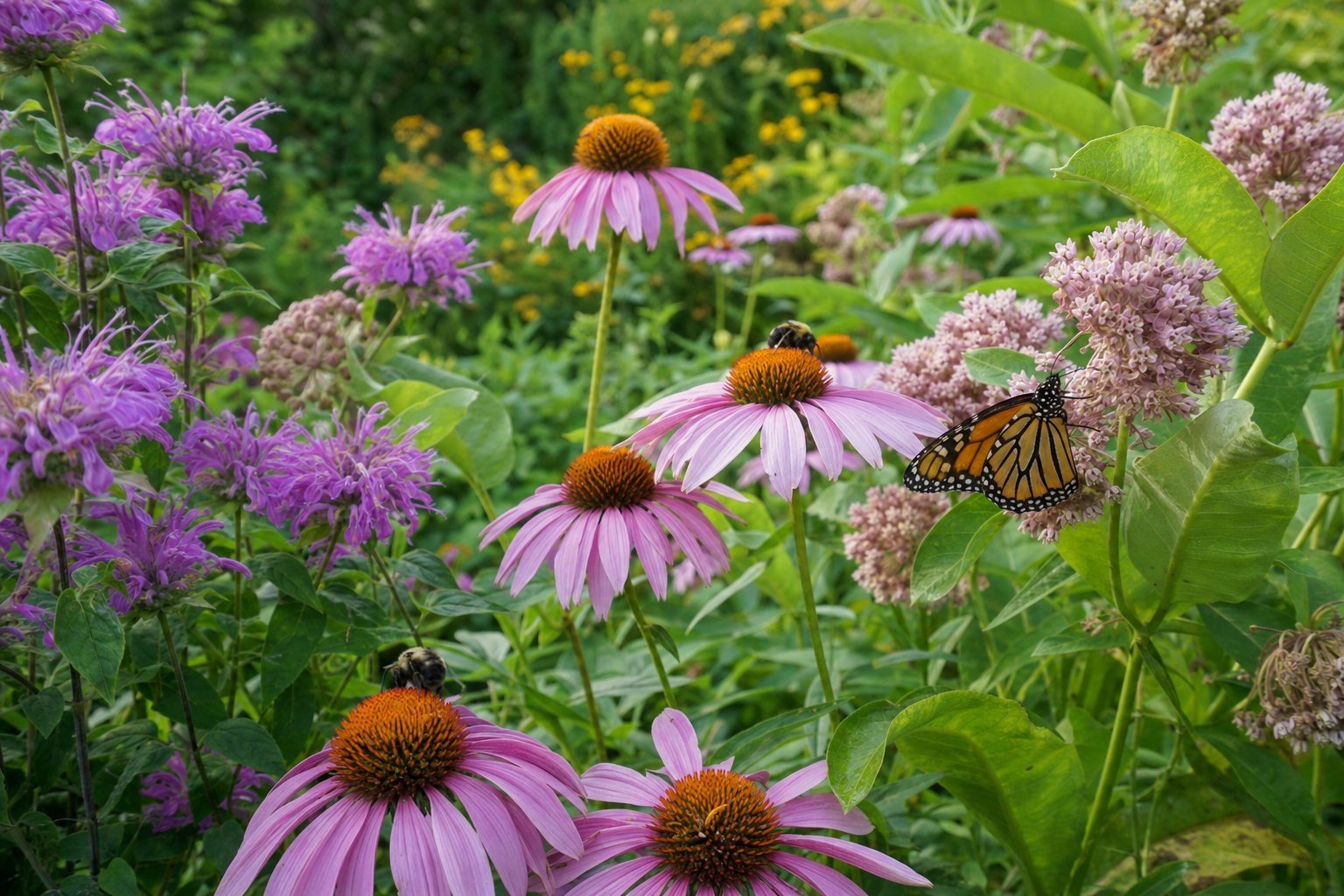
- Purple coneflower (Echinacea purpurea): a classic for butterflies and bees, with seed heads that feed goldfinches later.
- Wild bergamot (Monarda fistulosa): beloved by bumblebees, hummingbird moths and skippers.
- Penstemon: tubular blooms that suit long-tongued bees and hummingbirds.
- Milkweed (Asclepias): swamp milkweed for moist soil, butterfly weed for dry, sunny spots. Monarch caterpillars eat nothing else.
A common trap: the double-flower problem
Many ornamental varieties have been bred with extra petals, which often replaces the pollen- and nectar-bearing parts. Double petunias, many roses and some marigolds look lush but give pollinators almost nothing. Choose single-flowered forms whenever you can see the yellow center of the bloom.
Late summer and autumn: the season most gardens forget
August is when many beds start to look tired, and it is exactly when pollinators need the most support. Late bloomers carry bees and butterflies through to frost.
- Joe Pye weed (Eutrochium) and ironweed (Vernonia): tall, showy plants that draw swallowtails and bumblebees by the dozen.
- Anise hyssop (Agastache foeniculum): blooms for weeks, and the leaves smell of licorice.
- Zinnias (single-flowered types) and Mexican sunflower (Tithonia): annuals that are loved by monarchs and fritillaries.
- Goldenrod (Solidago): it does not cause hay fever – ragweed does. Goldenrod supports more than 100 species of native bees and moths.
- New England aster and aromatic aster: often the last big nectar source in October, essential for migrating monarchs.
- Sedum ‘Autumn Joy’ and Montauk daisy: reliable in tough, dry spots.
Designing the bed so pollinators actually use it
- Plant in drifts. Clumps of at least three to five plants of one species are easier for bees to spot than single plants scattered around.
- Go native where possible. Native plants usually support more native insects, especially specialist bees and caterpillars. Check your state’s extension service or the Xerces Society regional lists for your area.
- Provide sun. Most butterflies prefer at least six hours of direct light and a sheltered spot out of strong wind.
- Add a shallow water spot. A saucer with pebbles gives insects a safe place to drink.
- Skip the pesticides. Even “organic” sprays can harm bees. Also check nursery plants: some are pre-treated with systemic insecticides such as neonicotinoids. Ask before you buy.
Leave a little mess
About 70 percent of native bees nest in the ground, and many others use hollow stems or leaf litter. Leave some bare, undisturbed soil, and delay cutting back stems until late spring, when temperatures stay above about 50°F. Leaves under shrubs shelter overwintering butterfly pupae and caterpillars. A slightly untidy bed in March is often a very busy one in June.
Start small, then keep watching
You do not need a prairie to make a difference. A single 4-by-8-foot bed with one or two plants from each season can support dozens of species. Start with what fits your zone, note the gaps in bloom during the first year, and fill them the next. Keep a simple notebook of who visits and when – it is surprisingly addictive, and it teaches you more than any plant list. Your state extension office and local native plant societies are great places to dig deeper and find plants that thrive in your exact conditions.