A few years ago I stood in a grocery store on February 13th, looking at a bucket of perfect red roses for twelve dollars. They were flawless, long-stemmed and tightly budded. I also knew that a week earlier they had probably been growing in a greenhouse in Colombia or Ecuador. That bouquet had traveled more miles than most people do on vacation. It made me wonder what a flower’s “footprint” actually looks like, and whether choosing local blooms makes the difference we assume it does.
The short answer is that it depends. The longer answer is more interesting, and it can help you make smarter choices without guilt.
Where your flowers actually come from
In the United States, the majority of cut flowers are imported. Industry estimates put the figure at roughly 70–80 percent, with Colombia and Ecuador supplying most of it, followed by the Netherlands, Canada, and Mexico. Domestic production is concentrated in California, which grows a large share of American-grown cut flowers, but a growing number of small farms across the Midwest, Northeast, and Pacific Northwest now sell directly to customers.
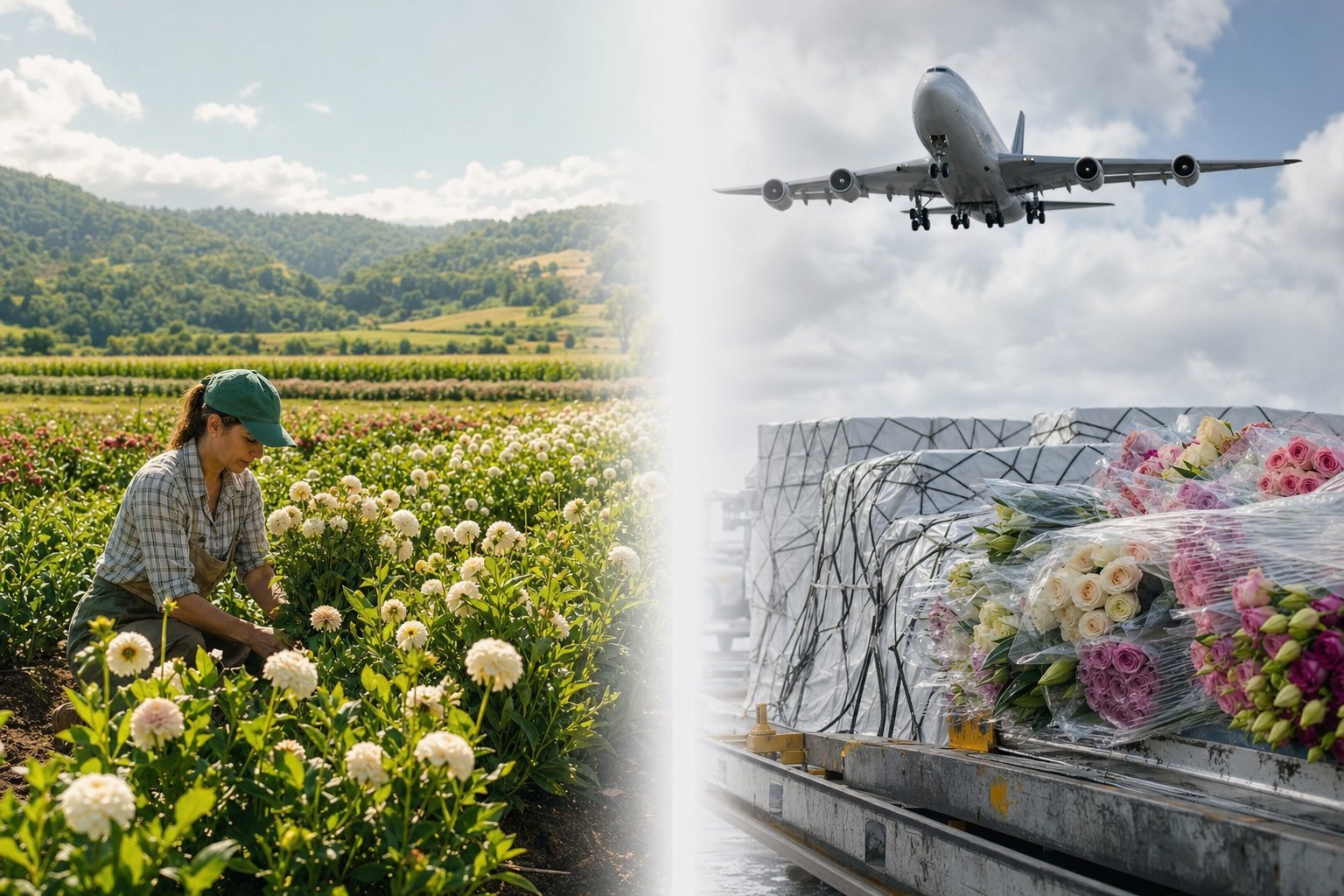
Most imported stems arrive by air, in refrigerated cargo holds, through Miami. From there they move by refrigerated truck to wholesalers, then to florists and supermarkets. The whole chain is built around one thing: keeping a perishable product cold and fast.
The carbon story is not as simple as “local good, imported bad”
Here is the part that surprises people. Flying flowers is carbon-intensive, but growing them can be too. Heated and lit greenhouses in cold climates use a lot of energy. A well-known 2007 study from Cranfield University in the UK compared Kenyan roses with Dutch roses. The Kenyan flowers, despite being flown thousands of miles, had a smaller carbon footprint, because they were grown outdoors with sunshine instead of in heated greenhouses.
That finding has limits. It was a specific comparison, and growing conditions, energy grids, and shipping methods have changed since then. But the lesson holds in 2026: how a flower is grown often matters as much as where.
Still, a field-grown dahlia from a farm 30 miles away has a clear edge. It needs no air freight, no long cold chain, and often no plastic sleeve or chemical preservative bath.
Beyond carbon: water, pesticides, and people
Carbon is only one piece. Other factors deserve attention:
- Water use. Large-scale flower farms in dry regions can strain local water supplies. Some growers in Kenya, Colombia, and Ethiopia now use recycling systems, but practices vary widely.
- Pesticides. Imported stems must pass plant-health inspections, and they are often treated to prevent pests from entering the country. Flowers aren’t food, so residue rules are looser. Workers in some regions face real exposure risks.
- Labor conditions. Certifications such as Fair Trade, Rainforest Alliance, and Veriflora address wages and safety, though they vary in rigor.
- Biodiversity. Local, seasonal growers often plant varieties that support pollinators. Many imported roses and carnations are bred for shelf life, not for nectar or pollen.
- Packaging and waste. Floral foam, a microplastic-shedding product, is still common in arrangements. Many local designers have dropped it for chicken wire or reusable frogs.
What about the jobs imports support?
It’s fair to ask. Flower farming employs hundreds of thousands of people in Latin America and East Africa, many of them women. Boycotting imports wholesale could hurt the very communities that rely on this work. A better approach is to favor certified imports when you do buy them, rather than avoiding them entirely.
A practical way to choose
I’ve found that a simple order of preference works well:
- Seasonal and local first. Think tulips and peonies in spring, zinnias and sunflowers in summer, dahlias and chrysanthemums in fall, and evergreens, hellebores, and dried stems in winter.
- Certified imports second. Look for Fair Trade or Rainforest Alliance labels, especially on roses, which are hard to grow in much of the U.S. in February.
- Uncertified imports last. If that’s what is available, you can still reduce the impact by choosing fewer stems and keeping them longer.
Some questions to ask your florist: Where were these grown? Are any from nearby farms? Do you use floral foam? Most are glad to answer, and the question itself nudges the industry.
Winter and Valentine’s Day: the hard case
Local flowers are scarce in January and February in much of the country. Instead of forcing the issue, consider potted bulbs, branches of forsythia or quince coaxed into bloom indoors, or dried arrangements. If roses are the point, a small bunch of certified ones beats a dozen conventional ones.
Small habits that matter more than the label
- Buy fewer stems and let them be the star.
- Re-cut stems and change water every two days to extend vase life.
- Compost spent blooms instead of tossing them in the trash.
- Grow a cutting patch of your own. A few square feet of zinnias can fill vases from July to frost.
The bottom line
Local, seasonal flowers usually have the lowest overall impact, especially when field-grown, but they aren’t a perfect rule. A heated greenhouse tulip in March can be worse than a responsibly grown imported rose. Ask where and how flowers were grown, favor the seasons, and treat certifications as a useful guide rather than a guarantee.
If you want to dig deeper, a good next step is to find a flower farm within an hour of your home and see what they grow across the year. Walking through a field in August tells you more about seasonal flowers than any article can.